Blog Websites Blog Articles Deerfield Beach
Cal's Digital Marketing designs professional blog websites and creates original blog articles for businesses in Deerfield Beach. Every website is organized for easy publishing, clear reading, mobile use, internal linking, article categories, technical SEO, schema markup, and long-term content growth. The goal is to turn useful business knowledge into a structured website that can attract search traffic and help readers take the next step.

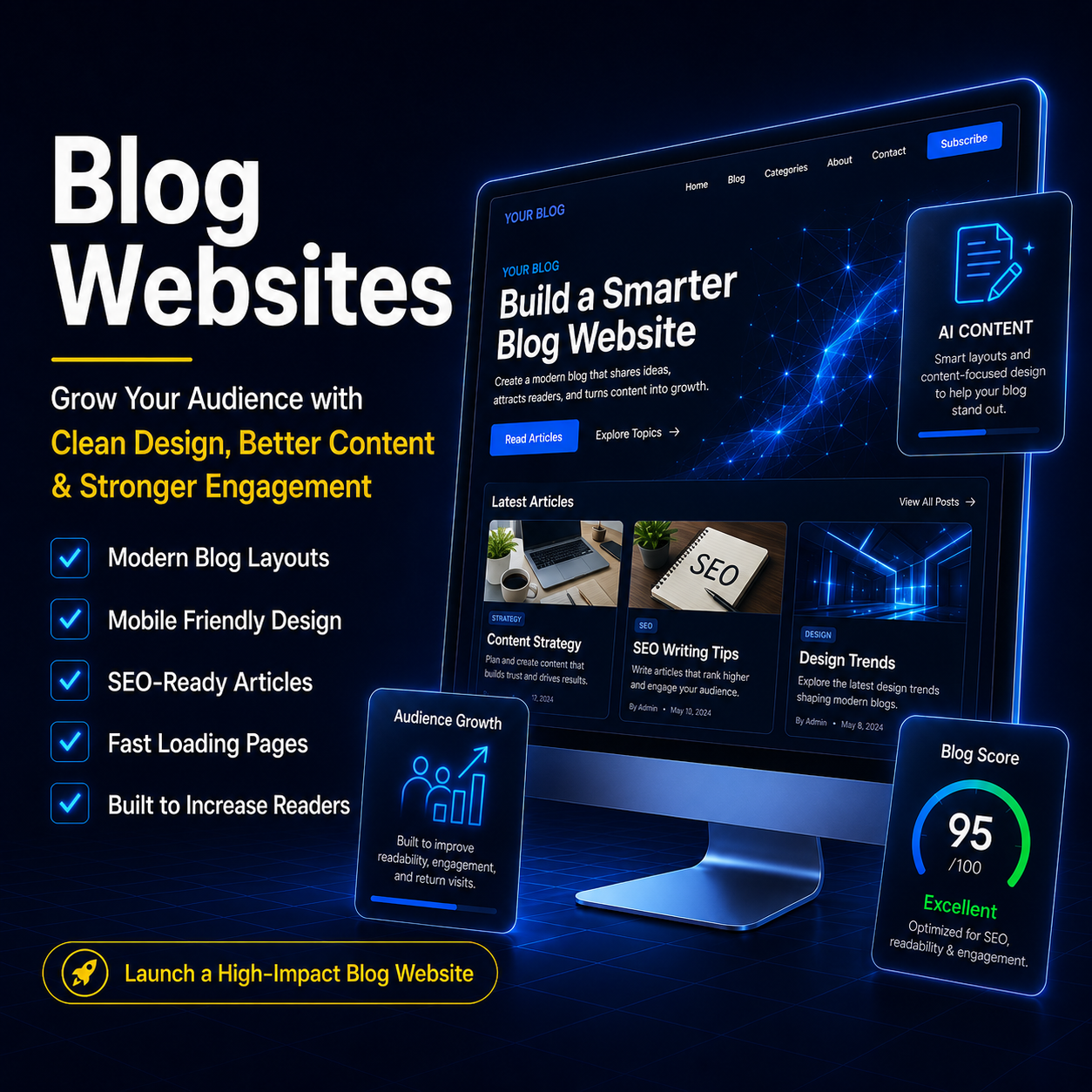
Blog Websites and Blog Articles Built for Long-Term Organic Visibility
Professional Blog Websites and SEO Blog Articles Deerfield Beach
Custom Blog Website Design
A custom blog website gives articles a clear home instead of adding posts to a layout that was never designed for publishing. Cal's Digital Marketing organizes the homepage, article archive, categories, featured content, contact paths, and individual post templates so readers can move naturally through the website. Every layout is responsive, easy to read, and structured around the topics the business wants to build over time.
Call (954) 488-2184SEO Blog Article Writing
SEO blog articles are written around real questions, useful comparisons, common concerns, and detailed topics connected to the business. Each article receives an original title, organized headings, natural keyword placement, internal links, metadata, and a clear next step for the reader. The goal is to create helpful content that can earn organic visibility while supporting the services and pages that matter most to the website.
Call (954) 488-2184Article Categories and Structure
A growing blog needs more than a long list of posts. Categories, topic groups, archive pages, tags, and navigation should help visitors find related information without creating duplicate or empty pages. We organize articles into a practical structure that supports browsing, internal linking, and search engine understanding. The result is a cleaner website that remains manageable as new articles are published and older content is updated.
Call (954) 488-2184Blog Content Planning
Content planning identifies the subjects a business should cover before articles are written. The process reviews core services, customer questions, seasonal concerns, local searches, long-tail topics, and gaps in existing website content. A clear article plan prevents repeated topics, supports consistent publishing, and connects each new post to a larger purpose. This creates a stronger content library instead of a collection of unrelated articles.
Call (954) 488-2184Internal Linking for Blog Articles
Internal links connect articles to related posts, important service pages, contact pages, and useful supporting resources. These links help visitors continue reading and show search engines how the website's topics relate to one another. We place descriptive links where they naturally help the reader, avoid excessive repetition, and build clear pathways from educational content to the pages that explain how the business can help.
Call (954) 488-2184Blog Article Updates
Older blog articles can lose value when information becomes outdated, search intent changes, links break, or competing pages become more complete. Article updates improve accuracy, organization, headings, metadata, internal links, examples, and calls to action without removing useful history unnecessarily. Regular content reviews keep the blog dependable for visitors and help important articles remain competitive as the website and industry continue to change.
Call (954) 488-2184Blog Technical SEO
Technical SEO helps blog pages load quickly, display correctly on mobile devices, and remain easy for search engines to crawl and index. We review canonical tags, article URLs, pagination, image delivery, schema markup, sitemaps, redirects, broken links, heading structure, and Core Web Vitals. Strong technical organization supports the content so useful articles are not held back by avoidable website problems.
Call (954) 488-2184Blog Article Schema
Structured data can identify each article, its headline, featured image, publication details, organization, and related page information. We add accurate schema that matches the visible content and connects articles to the website correctly. This improves technical clarity without adding information visitors cannot see. Schema is reviewed as part of the page structure so it remains consistent with titles, descriptions, URLs, images, and the article itself.
Call (954) 488-2184Blog Strategy Organized Blog Website That Ranks
Without a Clear Blog Strategy
- Articles cover unrelated topics without supporting important business pages.
- Categories and tags create clutter instead of helping readers navigate.
- Older content becomes outdated, inaccurate, or disconnected from the website.
- Articles receive little internal linking and no clear next step.
- Mobile layouts, page speed, metadata, and schema are overlooked.
With an Organized Blog Website
- Every article supports a planned topic, audience question, or business goal.
- Categories and article layouts make useful information easy to find.
- Internal links connect educational content to related articles and services.
- Technical SEO, metadata, images, and schema remain consistent.
- Content can be reviewed, expanded, and improved as search behavior changes.
Our 4 Step Blog Website Design
Plan the Blog Structure
We review the business, audience, existing website, article goals, categories, and important topics before creating the layout.
Clear website and content planDesign the Article Experience
The blog homepage, article archive, individual post layout, navigation, mobile view, typography, and calls to action are designed for readability.
Responsive blog designCreate and Optimize Content
Articles are written or organized with useful headings, original information, metadata, internal links, images, and accurate schema.
Search-focused article publishingReview and Build Over Time
Performance, indexing, article quality, internal links, outdated information, and future topic opportunities are reviewed as the blog grows.
Ongoing content improvementCal's Digital Marketing Blog Website FAQS
Can a blog be added to an existing business website?
Yes. A blog can be added to an existing business website when the current structure can support article archives, categories, individual post templates, internal links, and mobile-friendly navigation. The setup should match the existing design while giving blog content its own organized publishing system. Before adding it, the website should be reviewed for URL structure, page speed, duplicate content, technical SEO, and how new articles will connect to important service pages.
What is the difference between a blog website and a blog article?
A blog website is the complete publishing structure that contains the article archive, categories, navigation, templates, search features, and individual posts. A blog article is one page inside that structure focused on a specific question or topic. The website creates the organization, while each article adds useful information and another potential search entry point. Both need to work together so readers can move between related topics without becoming lost.
How are blog categories planned for a business website?
Blog categories should reflect the main subjects a business can cover consistently, not every possible keyword. We group related article ideas around services, customer questions, planning topics, maintenance information, local concerns, and useful comparisons. Each category should have enough future content to justify its place in the navigation. This prevents thin archive pages, duplicate topics, and confusing labels while helping visitors and search engines understand the website's subject structure.
Do you create local blog articles for Deerfield Beach businesses?
Yes. Local blog articles can address questions, services, conditions, events, regulations, neighborhoods, seasonal concerns, and customer needs connected to Deerfield Beach. Local references must be natural and useful rather than added repeatedly for keyword placement. Each article should still answer a real question and connect to the appropriate service page. The location focus is supported through accurate metadata, internal links, structured data, and the business information already present on the website.
How are blog article titles and URLs optimized?
Article titles are written to make the topic clear to both readers and search engines. URLs remain short, descriptive, and focused on the main subject without unnecessary dates, filler words, or repeated keywords. Before publishing, the title, URL, H1, metadata, headings, featured image information, and internal links are reviewed together. This creates a consistent page structure and reduces the chance of several articles competing for the same search intent.
Can old blog articles be updated without changing their URLs?
In many cases, yes. Keeping the existing URL can preserve the page's history while the title, introduction, headings, examples, internal links, metadata, images, and outdated information are improved. A URL should only be changed when there is a clear structural reason, and any change should include a correct redirect. The article should be evaluated before editing so useful rankings, links, and topic relevance are not lost through unnecessary replacement.
How do internal links help blog website SEO?
Internal links help readers discover related articles and move from educational content to important service or contact pages. They also show search engines how topics connect and which pages are most important within the website. Strong internal links use descriptive wording, appear where they genuinely help the reader, and avoid linking every repeated keyword. A planned linking structure can strengthen topic groups and reduce isolated articles that receive little attention after publication.
Will the blog website or Article be mobile friendly?
Yes. The blog homepage, category pages, article templates, images, headings, buttons, navigation, and contact paths should be responsive across phones, tablets, laptops, and desktop screens. Mobile readability is especially important because long articles can become difficult to use when text is too small, paragraphs are crowded, or images shift the layout. The design should maintain clear spacing, fast loading, accessible controls, and consistent article formatting at every screen size.