
Local SEO Deerfield Beach
Deerfield Beach SEO Company Focused on Rankings, Calls and Leads!









Request Deerfield Beach SEO Services
We Dont Just Talk About SEO Results We Show Results!
All keyword results shown are ranking on Google's first page in various positions. Search positions can vary slightly by location, device, and personalization. Our clients' revenue has increased by 25–40% within the first year of working with us.
Local SEO Services That help grow any size business.
Local SEO Strategy
We build a focused Local SEO strategy around your services, ideal customers, Deerfield Beach location, surrounding service areas, and current search visibility. Research includes local keywords, competitors, search intent, website structure, Google Maps results, and conversion opportunities. The strategy identifies which service pages, location pages, profile updates, content improvements, and technical corrections should be completed first. Every recommendation is organized around accurate targeting rather than broad traffic. This gives your business a clear plan for improving local relevance, strengthening search visibility, attracting qualified visitors, and generating more calls, form submissions, directions, and customer inquiries.
Call 954-488-2184Google Maps SEO
Google Maps SEO improves how clearly your business is understood for nearby service searches. We review your Google Business Profile, primary and secondary categories, services, description, website link, service areas, photos, updates, reviews, and business information. Supporting website pages are aligned with the profile so Google receives consistent location and service signals. We also check competitors in the local map results to identify practical opportunities. The goal is to improve relevance and visibility for qualified searches while making it easier for customers to call, request directions, visit your website, review services, and contact your business.
Call 954-488-2184Google Business Profile
Google Business Profile optimization keeps your company information complete, accurate, and connected to your website. We organize the business name, categories, services, hours, phone number, website, appointment links, service areas, attributes, description, photos, and customer-facing details. Duplicate, outdated, or inconsistent information is identified and corrected when access allows. The profile is supported with service-focused website content and local landing pages so customers receive consistent information in Search and Maps. A well-maintained profile helps customers quickly understand what you offer, where you operate, when you are available, and how to contact your business.
Call 954-488-2184Location Landing Pages
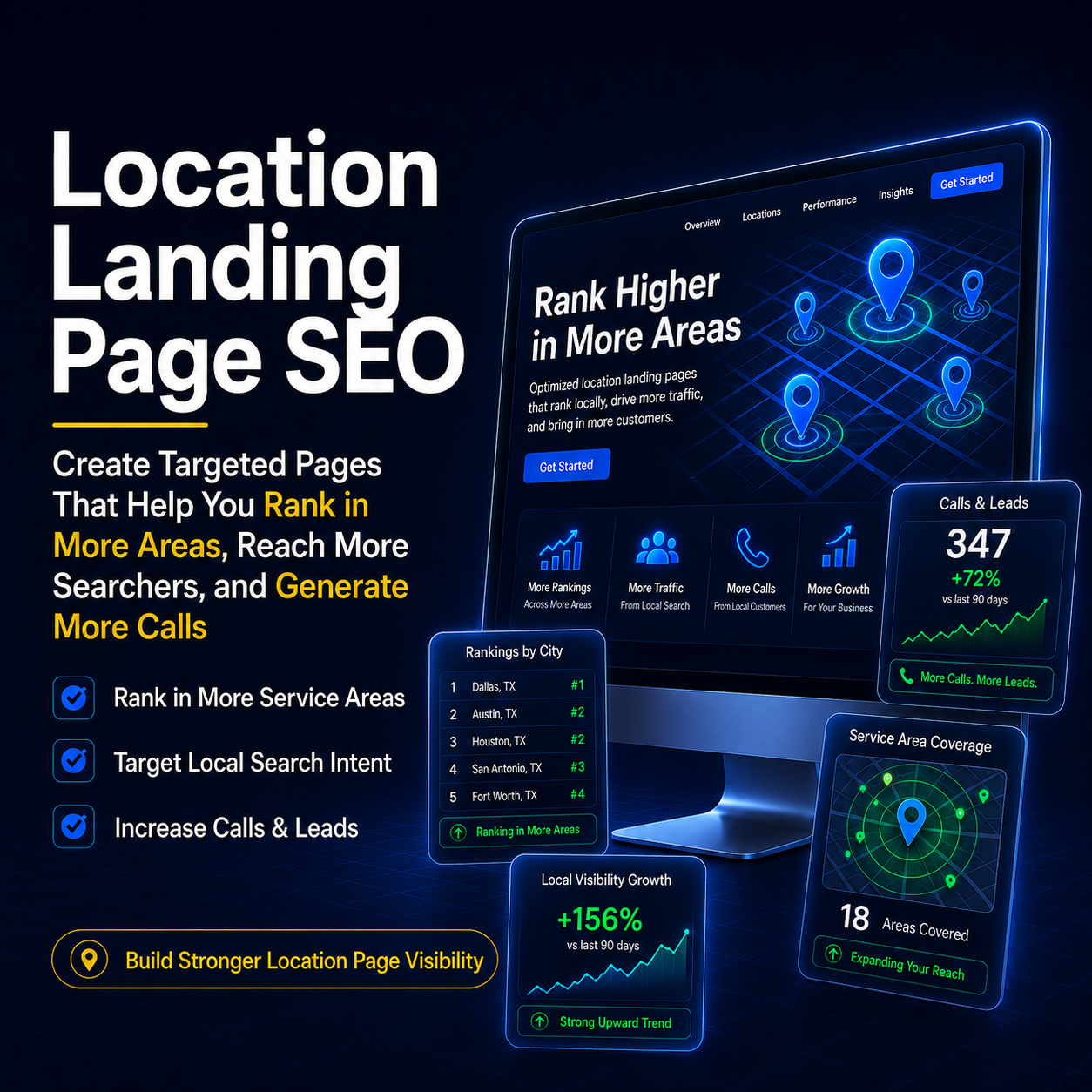
Location landing pages target the specific cities and communities your business serves without copying the same wording across every page. Each page includes original service information, accurate local references, clear headings, internal links, useful calls to action, optimized titles, descriptions, image details, and structured data. Pages are connected to relevant core services and organized so visitors can confirm availability in their area. This approach supports stronger local relevance for Deerfield Beach and surrounding locations while giving potential customers a useful page that explains the service, answers common questions, builds trust, and makes it easy to call or request a quote.
Call 954-488-2184On-Page Local SEO
On-page Local SEO improves the information search engines and customers see on every important page. We optimize page titles, meta descriptions, headings, service wording, location references, internal links, image alt text, calls to action, frequently asked questions, and structured data. Content is reviewed for accuracy, usefulness, duplicate wording, missing topics, and inconsistent city targeting. Core service pages are connected to supporting location pages so the website has a clear structure. These improvements help Google understand the relationship between your business, services, and service areas while helping visitors find the right information and take the next step.
Call 954-488-2184Local Citations
Local citation management strengthens the consistency of your business information across important online directories and local platforms. We review how your business name, address or service-area details, phone number, website, hours, and categories appear across listings. Incorrect, duplicate, incomplete, or outdated citations can create confusion for customers and search engines. We organize the most important corrections and build accurate listings where they are relevant to the business. Consistent information supports local trust, reinforces your Google Business Profile, and gives customers reliable ways to find your website, confirm services, call your company, request directions, or contact you.
Call 954-488-2184Review Optimization
Review optimization helps your business create a consistent process for earning, monitoring, and responding to legitimate customer feedback. We organize review-request links, website review sections, customer follow-up opportunities, response guidance, and profile connections without using misleading or prohibited review practices. Reviews can help potential customers compare providers, understand service quality, and feel more confident before calling. Responses also give the business an opportunity to acknowledge customers and address concerns professionally. A steady review process supports trust, improves the usefulness of your Google Business Profile, and can strengthen engagement when customers find your company in local search results.
Call 954-488-2184SEO Reporting
Local SEO reporting shows what work was completed, which pages and profiles were improved, how important keywords are moving, and where additional opportunities remain. Reports can include local rankings, Google Business Profile activity, website traffic, calls, form submissions, landing-page performance, indexed pages, and technical findings when tracking is available. We explain the results in clear language and connect them to the next actions. Ongoing reporting helps avoid random changes, identifies pages that need more support, and keeps the campaign focused on qualified visibility, customer actions, and steady improvement rather than rankings alone.
Call 954-488-2184AEO SEO GEO Best Practices
SEO Best Practices
SEO improves how a website appears in traditional search results for services people actively need. It focuses on clear page structure, useful content, accurate titles, internal links, technical performance, local relevance, and trustworthy business information. The advantage is stronger visibility for searches that can produce calls, directions, forms, and leads. Cal’s Digital Marketing applies SEO best practices by researching Deerfield Beach search intent, improving service and location pages, strengthening Google Business Profile connections, correcting technical issues, and organizing content around real customer questions. This creates a consistent foundation that helps search engines understand the business and helps customers take action.
Call 954-488-2184AEO Best Practices
AEO, or Answer Engine Optimization, helps content become easier for search engines, voice assistants, and AI-powered results to understand and quote as a direct answer. It uses clear questions, concise answers, helpful definitions, logical headings, structured data, and complete service information. The advantage is better visibility when customers ask conversational questions instead of typing short keywords. Cal’s Digital Marketing uses AEO best practices by writing answer-first content, building useful FAQ sections, connecting related topics, adding accurate schema, and explaining services in plain language. This helps Deerfield Beach businesses appear clearly across search features while giving potential customers faster, useful information.
Call 954-488-2184GEO Best Practices
GEO, or Generative Engine Optimization, prepares business information for AI-generated search experiences that combine details from multiple sources. It emphasizes accurate facts, original expertise, consistent brand information, clear service explanations, strong local signals, and content that can be verified across the website and business profiles. The advantage is greater visibility when AI tools summarize providers, compare services, or recommend local options. Cal’s Digital Marketing uses GEO best practices by aligning website content, Google Business Profile details, citations, reviews, service pages, and local references. This gives Deerfield Beach businesses a digital footprint that search engines and generative systems can confidently understand.
Call 954-488-2184Local SEO Packages Built Around Your Business Growth
Local SEO Foundation
Package Includes
- Complete local SEO audit, keyword research, competitor review, and priority action plan.
- Optimize core service pages, titles, headings, internal links, image details, and local schema.
- Review business information, tracking, indexability, mobile usability, and technical SEO issues.
Benefits
- Build a clear foundation for local organic visibility.
- Help search engines understand your services and target locations.
- Make important pages easier for customers to find and use.
Google Maps Growth
Package Includes
- Optimize Google Business Profile categories, services, description, hours, photos, and links.
- Align profile information with website services, service areas, location pages, and contact details.
- Review local map competitors, profile activity, customer actions, and ranking opportunities.
Benefits
- Improve relevance for nearby service searches.
- Increase opportunities for calls, directions, and website visits.
- Present complete and consistent information in Google Search and Maps.
Multi-Location SEO
Package Includes
- Create original location landing pages for approved cities and service areas.
- Connect each location page to relevant services with organized internal links and calls to action.
- Optimize local titles, descriptions, headings, FAQs, images, and structured data for every page.
Benefits
- Expand visibility across multiple local service areas.
- Give customers useful information for their specific city.
- Avoid thin, duplicated, or conflicting location content.
Ongoing SEO Management
Package Includes
- Continue content improvements, local page expansion, Google Business Profile updates, and technical fixes.
- Track rankings, traffic, calls, forms, indexed pages, profile actions, and completed campaign work.
- Review results monthly and prioritize the next website, content, citation, and profile improvements.
Benefits
- Maintain consistent Local SEO progress over time.
- Respond to performance changes and new local competitors.
- Keep the website and business profile accurate, useful, and current.
Get a Deerfield Beach SEO Quote Today!
Call 954-488-2184Our Four Step Local SEO Process
Audit and Research
We review your website, Google Business Profile, services, target locations, rankings, competitors, citations, content, technical issues, and current tracking before building the campaign.
Local SEO audit and strategyOptimize Website and Profile
We improve priority service pages, location targeting, titles, headings, internal links, content, structured data, and Google Business Profile information around approved search goals.
Website and profile optimizationBuild Local Relevance
We strengthen location pages, service-area connections, citations, reviews, local content, and supporting signals so customers and search engines receive consistent business information.
Local authority and service-area growthTrack and Improve
We monitor rankings, traffic, calls, forms, profile actions, indexed pages, and completed work, then use the results to prioritize the next improvements.
Reporting and ongoing optimizationLocal SEO Deerfield Beach FAQs
What does Local SEO do for a Deerfield Beach business?
Local SEO helps a Deerfield Beach business appear more clearly when nearby customers search for its services. Cal's Digital Marketing improves the website, Google Business Profile, service pages, location signals, citations, reviews, internal links, and technical setup so search engines can better understand what the company offers and where it operates.
How is Local SEO different from traditional SEO?
Traditional SEO can target broad regional or national searches, while Local SEO focuses on customers searching within a specific service area. Local SEO places greater emphasis on Google Maps, Google Business Profile information, local landing pages, reviews, citations, location relevance, and consistent business details across the website and trusted directories.
What helps a business appear in Google Maps results?
Google Maps visibility is influenced by relevance, distance, prominence, competition, and the quality of available business information. A complete Google Business Profile, accurate categories, detailed services, consistent contact information, legitimate reviews, helpful photos, local website content, citations, and strong connections between the profile and website can support better visibility.
Why are service pages and location pages important for Local SEO?
Service pages explain what the business provides, while location pages explain where those services are available. Original, useful pages give customers specific answers and help search engines connect each service with Deerfield Beach. Cal's Digital Marketing organizes these pages with clear headings, internal links, calls to action, metadata, local details, and structured information.
How do SEO, AEO, and GEO work together?
SEO improves visibility in traditional search results, AEO helps content answer direct and conversational questions, and GEO helps business information remain clear for AI-generated search experiences. Cal's Digital Marketing combines all three by building useful local pages, answer-first FAQs, accurate schema, consistent business facts, strong service explanations, and trustworthy location signals.
Can Local SEO help increase calls and leads?
Local SEO can increase opportunities for calls and leads by making a business easier to find for relevant nearby searches. Results depend on competition, demand, website quality, Google Business Profile strength, reviews, location, and campaign consistency. Cal's Digital Marketing focuses on qualified visibility and clear conversion paths rather than traffic alone.
How long does Local SEO take to show improvement?
Some corrections can be processed quickly, but meaningful Local SEO improvement usually develops over time as pages are indexed, business information becomes more consistent, reviews grow, and search engines evaluate relevance and authority. Timing varies by competition, website condition, service demand, target terms, location, and the amount of work required.
What does Cal's Digital Marketing review before starting Local SEO?
Cal's Digital Marketing reviews the website, Google Business Profile, services, target customers, Deerfield Beach coverage, competitors, rankings, technical issues, content gaps, citations, reviews, tracking, and conversion paths. This review identifies the highest-priority improvements and helps create a practical Local SEO plan based on the business's actual services, goals, and service area.